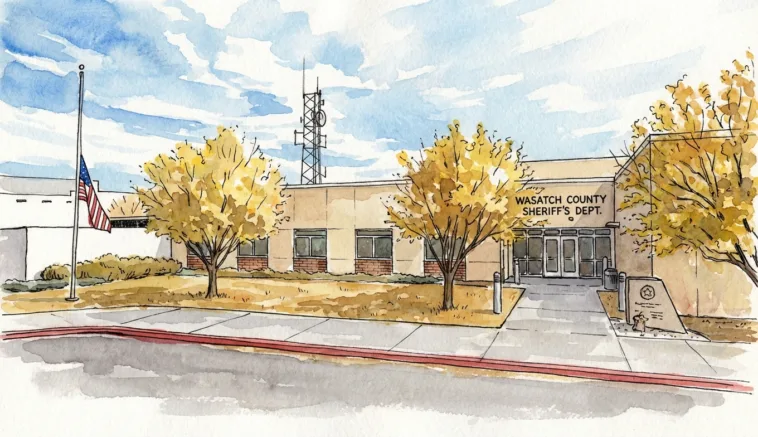
The Legal Implications of High-Speed DUI Incidents
The recent incident in Heber City, where a suspected DUI driver went wrong-way and sparked a tense standoff with the police, raises many questions about our legal system and public safety procedures. This episode is not only a stark reminder of the dangers posed by impaired driving, but also an opportunity to explore the tangled issues surrounding law enforcement tactics, individual rights, and criminal accountability in high-pressure situations.
On a seemingly ordinary Friday, local authorities responded to a high-speed collision that quickly escalated into a chaotic and nerve-racking standoff. The driver, identified as 32-year-old Stockton Charles Harlow McBride, reportedly made a series of risky maneuvers—driving at extraordinarily high speed against oncoming traffic, colliding with another vehicle, and eventually barricading himself within his car. As officers arrived on the scene, McBride’s claim of possessing a firearm and his subsequent defiance during negotiations prompted the use of a taser, culminating in his arrest.
This editorial aims to shed light on the subtle details behind the legal procedures that were followed, the broader implications for DUI-related offenses, and the lessons law enforcement agencies can learn from such incidents. By taking a closer look at the fine points of this case, we can better understand the legal landscape that governs similar episodes of impaired and dangerous driving.
Understanding the Legal Framework Surrounding DUI Offenses
The case in Heber City is emblematic of a broader issue that has been on the minds of policymakers, legal professionals, and community members alike. DUI incidents, especially those that involve wrong-way driving and standoffs, are covered by a vast array of laws and regulations intended to protect both the individual rights of the accused and the safety of the general public.
Statutory Overview
In most jurisdictions, DUI laws are designed to deter dangerous driving habits while ensuring that offenders are held accountable. The key areas that legal experts often debate include:
- The standards for establishing impairment and intoxication.
- The admissibility of evidence, particularly when dangerous methods such as tasers are employed.
- The balance between maintaining public safety and respecting the constitutional rights of the suspect.
For instance, in this particular incident, not only was McBride’s behavior a clear violation of traffic regulations, but the subsequent standoff added another layer of legal complication. The fact that drug paraphernalia was later found in his vehicle—and that tests confirmed the presence of meth—further compounds the case, introducing additional charges related to drug use and possession.
Challenges in Proving Impaired Driving
One of the most convoluted bits in DUI cases is proving that the driver was impaired at the time of the incident. Prosecutors must rely on multiple forms of evidence, including:
- Witness testimonies from both road users and law enforcement officers.
- Physical evidence collected from the scene of the accident.
- Expert testimony regarding the driver’s behavior and the potential impact of substances.
Each of these elements presents its own set of twists and turns. For example, eyewitnesses may offer conflicting accounts, and physical evidence might be subject to varying interpretations. In this case, security footage played a critical role by confirming the high-speed driving and the failure to stop at a red light. Such video evidence is super important because it provides an objective perspective that can help clarify the confusing bits of the narrative.
Police Response and the Use of Force: A Legal Analysis
The police response in Heber City has also brought attention to the legal justifications for using force in the field, particularly when a suspect becomes unpredictable. The tension in such environments is loaded with issues that challenge both our legal and ethical frameworks.
Assessing the Necessity of Tactical Intervention
When McBride barricaded himself inside the car and brandished a weapon, officers were confronted with an intimidating situation. In these circumstances, law enforcement often has to make split-second decisions on whether to engage using non-lethal methods such as tasers. Some of the key aspects examined by legal experts include:
- Whether the use of force was proportional to the threat posed.
- If alternative methods could have been employed to de-escalate the scenario.
- How the suspect’s actions, such as claiming to have a firearm, legally justified the officers’ response.
These questions are not just theoretical. They are at the heart of many legal battles involving civil rights and police accountability. The high-stress circumstances of a standoff are full of problems when it comes to managing the delicate balance between assertive law enforcement and the risk of excessive force.
Legal Precedents on Taser Use in Standoff Scenarios
Court rulings in previous cases provide guidance on the conditions under which taser use is considered acceptable. Some of the fine points include:
- The immediate threat to the safety of officers and the public.
- The overall behavior and compliance of the suspect during initial contact.
- The availability of other de-escalation techniques.
Although each incident is unique and the legal standards can vary between jurisdictions, the outcomes often hinge on whether the actions taken by law enforcement were viewed as necessary and reasonable. In the Heber City situation, the officers’ decision to use a taser was shaped by a cocktail of factors, including the suspect’s rapid escalation of misbehavior and the presence of dangerous substances in his vehicle.
Public Safety versus Individual Rights: A Tense Balancing Act
The Heber City episode also brings into focus the subtle details between safeguarding public safety and protecting the rights of individuals. This legal balancing act is one that has evolved over the years, often involving stringent court reviews and legislative changes.
Community Reaction and Public Policy
Instances like this stir debate in the community, where citizens and policymakers alike weigh in on the effectiveness of current DUI regulations and police procedures. Some key considerations include:
- Is the current legal framework robust enough to deter wrongful behavior?
- How do we ensure that law enforcement actions do not overstep constitutional boundaries?
- What measures can be implemented to both punish offenders and offer rehabilitation?
These are not just challenging bits to figure a path through—they are core questions that impact the legal system on a systemic level. Many advocates call for a revision of DUI laws that would include stricter penalties for repeat offenders, especially when high-speed and wrong-way driving are involved. Additionally, there is a call for improved training for officers to better manage nerve-racking confrontations without resorting immediately to physical force.
Legal Reforms on the Horizon
In response to incidents like the one in Heber City, lawmakers are sometimes prompted to take a closer look at the existing legal mandates. Potential reforms might include:
| Area of Concern | Potential Legal Revisions |
|---|---|
| DUI Infractions | Stricter evidence standards and higher penalties |
| Police Use of Force | Clearer guidelines on the use of non-lethal force and mandatory reporting |
| Surveillance and Evidence Gathering | Enhanced protocols for collecting and preserving digital evidence (e.g., security footage) |
| Drug-Related Offenses | Improved integration of substance abuse assessments in DUI cases |
This table encapsulates several potential areas where legal adjustments can help mitigate the risk of similar high-tension incidents in the future. Every incident gives us a chance to learn and to refine the legal tactics and enforcement procedures that keep our communities safe.
Reevaluating Law Enforcement Tactics in High-Conflict Situations
One of the predominant lessons from this incident pertains to the ways in which police are trained to respond in dangerous situations. The tactical decisions made on the ground are filled with challenging twists and turns that can be hard to manage without a robust training system in place.
The Need for Enhanced Tactical Training
In high-stress scenarios, officers must quickly make decisions that could mean either a safe resolution or a needless escalation of violence. Training programs must therefore aim to address several key areas:
- De-escalation Techniques: Officers should be equipped with methods to calm tense confrontations and prevent situations from spiraling out of control.
- Communication Skills: Using clear and precise language, particularly when engaging with potentially armed suspects, is essential.
- Risk Assessment: Understanding when and how much force to use is a critical, yet challenging, part of the job.
Improved training should not only focus on the physical aspects of conflict resolution but also on the psychological and social angles. For instance, understanding the underlying issues that drive someone to engage in dangerous behavior—such as substance addiction or mental health crises—can help officers figure a path to more compassionate interventions.
Use of Modern Technology in Law Enforcement
As this case demonstrates, modern technology can offer pivotal assistance during criminal investigations. The security cameras that captured McBride’s reckless driving, for example, provide an objective record that supports law enforcement’s assertions. Incorporating more high-tech tools into police work can help mitigate the nerve-racking aspects of making life-altering decisions under pressure.
Key technological enhancements could include:
- Improved body camera systems that offer high-resolution footage.
- Real-time data analytics that quickly compile and analyze evidence from the scene.
- Advanced communication tools that enable better coordination during rapidly evolving incidents.
Such modernizations, while super important for protecting officers and the public, also ensure that all parties receive fair treatment under the law. The balance between technology use and civil liberties remains a delicate one, inviting ongoing legal debates about privacy rights and proper surveillance protocols.
The Role of Public Oversight and Legal Accountability
Cases involving dynamic and high-risk encounters, like the Heber City standoff, are often full of problems related to oversight. Ensuring that law enforcement actions are continually reviewed helps maintain the trust between the community and the police force.
Ensuring Transparency in Police Operations
Transparency is key when it comes to confronting the complicated pieces of policing in life-threatening scenarios. Some steps to enhance accountability include:
- Mandatory public reporting on the results and reviews of police engagements.
- Independent investigations into cases where the use of force is questioned.
- Community forums that allow local citizens to voice concerns and offer suggestions.
By openly sharing details of encounters and scrutinizing the decisions made, law enforcement agencies can foster a climate of trust. Such accountability measures are super important in ensuring that every side of the legal equation—both the rights of the individual and the safety of the public—is given due consideration.
Judicial Oversight and the Balance of Powers
The judicial system plays a critical role in examining claims that arise from police interventions. Courts must sift through the little details of each case, determining whether officers acted within the bounds of their authority. In this context, it is essential to acknowledge the fine shades between reasonable use of force and overreach.
Judicial oversight typically focuses on:
- The legality of the initial stop and the subsequent detention of the suspect.
- The manner in which force was applied, including whether less aggressive measures were feasible.
- The overall impact of the incident on the community’s trust in law enforcement.
These judicial reviews are a cornerstone of the legal system, ensuring that citizens’ rights are safeguarded while also allowing law enforcement to perform their duties effectively. It is a nerve-racking process for everyone involved, highlighting the importance of clarity and precision in both criminal statutes and police protocols.
Policy Implications and Future Legal Reforms
Reflecting on the Heber City incident provides a valuable opportunity to consider potential policy reforms that could help manage or even prevent future confrontations of this nature. As lawmakers and legal experts dig into the case details, several areas emerge as ripe for examination and reform.
Strengthening DUI Laws
One area that many experts agree warrants review is the current approach to DUI offenses. Considering the dangerous combination of high-speed driving, substance abuse, and the added element of a standoff, there is a clear need to refine the legal standards applicable to these cases.
Reform initiatives might include:
- Adopting stricter per se blood alcohol concentration limits for drivers.
- Implementing mandatory substance abuse evaluations for offenders.
- Enhancing penalties for incidents involving wrong-way driving and reckless maneuvers.
These measures could serve as super important deterrents, reducing the likelihood of similar dangerous behaviors in the community. Lawmakers must carefully figure a path that is both fair to individual defendants yet uncompromising in its commitment to public safety.
Balancing Public Safety and Civil Liberties
Another pressing issue that arises from this case is the balance between maintaining public safety and protecting civil liberties. Police actions, particularly in high-octane scenarios, have to be constantly scrutinized to prevent abuse of power. At the same time, the community expects police to act swiftly and decisively in the face of imminent danger.
Effective reforms could be designed around:
- Clearer guidelines that detail when and how force can be employed.
- Robust training programs that emphasize both tactical efficiency and respect for individual rights.
- Stronger oversight mechanisms that involve independent bodies reviewing questionable cases.
Finding the right balance is a complicated piece that requires continuous dialogue between police departments, community leaders, and legal experts. The fine points involved in making these decisions underline the importance of an adaptive and transparent legal framework.
Exploring the Evidence: The Role of Surveillance in Legal Proceedings
One of the reassuring aspects of the Heber City case was the role of modern surveillance in establishing what happened during the incident. High-resolution security footage was instrumental in piecing together the rapid succession of events that led to McBride’s arrest. For legal professionals, this type of evidence is key in clarifying many of the subtle details that are otherwise lost in chaotic moments.
Value and Limitations of Video Evidence
Video recordings from traffic cameras and body-worn devices are becoming increasingly pivotal in DUI and traffic-related cases. They offer undeniable advantages, such as:
- Providing objective accounts of events.
- Helping corroborate witness statements and officer testimonies.
- Allowing a detailed review of the sequence of actions leading up to a standoff.
However, there are also challenging bits tied to the use of such evidence. Some limitations include:
- The possibility of misinterpretation if footage is taken out of context.
- Privacy concerns regarding continuous surveillance.
- Technical issues with equipment that may compromise the clarity or completeness of recordings.
These factors underscore the need for clear legal guidelines on how surveillance evidence is to be collected, stored, and presented in court. Such protocols must find a super important balance between effective law enforcement and the protection of individual privacy rights.
Integrating Evidence Into a Coherent Legal Narrative
When presenting a case in court, especially one as nerve-racking as a DUI-related standoff, all pieces of evidence must be carefully woven together to form a coherent narrative. The following steps are essential when integrating surveillance evidence:
- Verifying the authenticity and integrity of the footage.
- Presenting clear, time-stamped sequences that link actions to consequences.
- Comparing video records with witness and expert testimonies.
This methodical approach to handling evidence not only strengthens the prosecution’s case but also helps safeguard the rights of the accused. The fine shades between corroborative evidence and potential overreach are delicate, highlighting the nerve-racking responsibility that falls on the shoulders of both law enforcement and legal professionals.
Looking Ahead: Lessons for Policy Makers and Law Enforcement
The events in Heber City serve as a case study that sheds light on the many challenges law enforcement faces when encountering dangerous drivers. The public and legal experts alike are calling for changes that address the tangled issues of high-speed DUI incidents and the methods used to resolve them.
Key Takeaways for Policy Makers
Based on the Heber City incident, several super important lessons emerge that can guide future policy reforms:
- Enhance DUI Regulations: Revisiting and potentially tightening DUI laws could provide a stronger deterrent against reckless driving.
- Improve Officer Training: Expanding training programs to cover both tactical and communication techniques can help officers manage high-pressure encounters better.
- Implement Advanced Surveillance: Modernizing surveillance tools ensures that evidence is handled with precision, thereby supporting both public safety and legal due process.
- Maintain Civil Liberties: Transparent oversight and judicial reviews are essential to maintaining a fair balance between law enforcement powers and individual rights.
These points are critical in forging a path forward that aligns public safety interests with the protection of civil freedoms. Policy makers must work together with legal experts and community representatives to draft reforms that take into account the full spectrum of issues present in high-speed DUI cases.
Lessons for Law Enforcement Agencies
While legal reforms are a key component of long-term change, immediate improvements on the ground can also greatly enhance public safety. Law enforcement agencies can take away several practical lessons from this case:
- Stress-Responsive Tactics: Equip officers with the latest de-escalation strategies that are designed to calm tense encounters, reducing the need for forceful intervention.
- Interagency Collaboration: Enhance communication across different agencies to ensure that critical information—such as surveillance footage and forensic data—is readily available during dynamic incidents.
- Community Engagement: Build regular channels of dialogue with the public to foster trust, explain law enforcement methods, and gather feedback on community concerns regarding police use of force.
These measures are not only necessary for handling nerve-racking confrontational incidents but also play a role in the long-term improvement of community-law enforcement relationships. When police can find their way through complex situations without escalating violence, it creates a better environment for everyone involved.
Conclusion: A Call for Balanced, Informed Legal Reforms
The unfolding events in Heber City remind us that at the intersection of public safety and individual rights lies a delicate legal balance. A wrong-way DUI incident, compounded by a standoff and evidence of substance abuse, exposes the challenging bits that both law enforcement and the legal system must navigate. As this case continues to unfold through the courts, it offers critical insights for policy makers, law enforcement agencies, and community stakeholders who are working to ensure that both safety and justice are upheld.
Ultimately, the Heber City incident is not an isolated event—it is a symptom of broader issues that require thoughtful, informed reforms. By taking a closer look at the legal framework surrounding DUI offenses, the careful use of force in standoffs, and the vital role of modern technology and oversight, we can begin to sort out the tangled issues that threaten both public safety and civil liberties. With targeted policy changes and enhanced training programs, there is hope that future incidents can be managed more effectively, ensuring that our legal system remains both just and responsive to the demands of an ever-changing public sphere.
In a field where every decision can have life-altering consequences, making your way through the nerve-racking twists and turns requires a steady hand. Law enforcement officers must be supported by clear legal guidelines, robust training, and transparent oversight that together maintain the fragile balance between protecting the community and preserving the rights of the individual. Only through such comprehensive, balanced approaches can we ensure that justice is served, public safety is maintained, and the legal system continues to adapt to the challenges of modern society.
As we reflect on this case and consider its broader implications, it is essential that we continue to dive in to the underlying legal and social issues. A careful examination of the evidence, tactics, and legislative responses will not only help us prevent similar incidents in the future but also build a more resilient, responsive, and fair justice system for everyone.
Originally Post From https://hoodline.com/2025/07/heber-city-police-arrest-suspected-dui-driver-after-wrong-way-crash-and-standoff/
Read more about this topic at
Heber City Police Arrest Suspected DUI Driver After Wrong …
Redlands Police Respond to Standoff, fatal crash and …