Executive Order and Policy Shifts in Homelessness Management
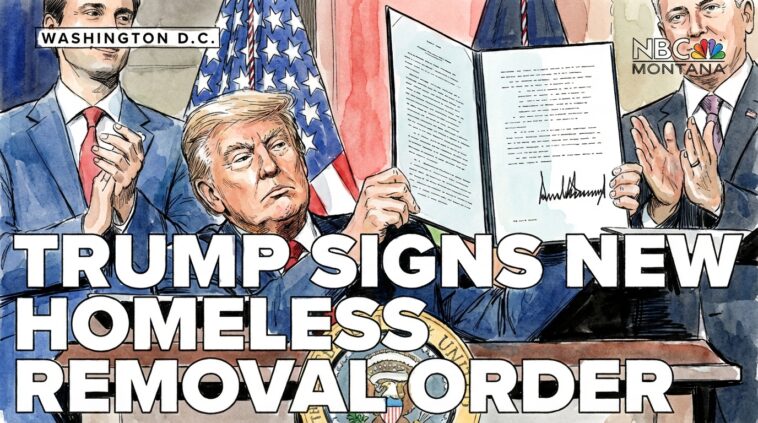
This week, a new executive order signed by President Trump has once again thrust the issue of homelessness into the national spotlight. The order, which promises sweeping changes in the way the federal government and local jurisdictions handle homelessness, has ignited an intense debate over public safety, funding priorities, and the ethical dilemmas that arise when addressing one of society’s most pressing social challenges.
At its core, the executive order seeks to shift the focus of federal funding away from long-established housing-first policies and towards initiatives that emphasize sobriety and treatment. This redirection is intended to empower cities and states to remove outdoor encampments more quickly and, if necessary, to commit individuals to mental health or addiction treatment involuntarily when they are deemed a danger to themselves or others. In doing so, the order aims to address what its proponents describe as the “tricky parts” associated with managing chronic homelessness in urban areas.
Redefining Federal Funding Priorities in Homelessness Policy
One of the key elements of the executive order is the reallocation of federal funding. This new approach de-emphasizes the longstanding housing-first model, which has historically prioritized getting people off the streets before offering treatment for mental health or substance abuse challenges. Instead, federal dollars will now be channeled into programs that not only require individuals to demonstrate sobriety and pursue treatment but also encourage local governments to enforce bans on urban camping more strictly.
This change in funding strategy reflects a belief among some policymakers that housing-first practices have not adequately addressed the “tangled issues” associated with homelessness, particularly when coupled with an increasing demand for public safety. The new approach places the onus on states, cities, and local agencies to allocate resources in a way that enforces stricter measures against behaviors such as illicit drug use, loitering, and urban squatting.
Shifting Financial Resources: A Detailed Overview
A closer look at the financial reallocation reveals several critical points and potential consequences:
- Prioritizing Enforcement: Federal funding will increasingly favor cities that actively enforce bans on homeless encampments, aligning financial incentives with tougher public order measures.
- Redirecting Program Support: Funding for programs utilizing harm reduction strategies, such as providing clean needles and overdose prevention tools, may face significant reductions, a move that has sparked concerns among public health experts.
- Implications for Treatment Programs: While some treatment programs may receive enhanced support, those that incorporate harm reduction may be defunded, fundamentally altering the landscape of addiction services.
This table summarizes the key reallocation aspects:
| Policy Element | Previous Approach | New Direction |
|---|---|---|
| Housing First | High priority for stable housing and then treatment | Less priority; focus shifts to immediate treatment requirements |
| Federal Funding Prioritization | Programs promoting supportive housing | Programs emphasizing sobriety and strict enforcement measures |
| Harm Reduction Initiatives | Comprehensive support including clean needles and overdose prevention | Potential defunding with emphasis on abstinence-based approaches |
Critics argue that such redirection may overlook essential “little details” involved in managing homelessness — details that contribute significantly to overall public health outcomes and societal well-being.
Concerns over Involuntary Treatments and Civil Commitment
The executive order also raises critical ethical questions as it endorses involuntary civil commitment for individuals deemed a danger to themselves or others. This approach is intended to streamline the process of moving individuals from outdoor encampments to treatment facilities, but it also comes with considerable controversy.
Supporters of the order claim that prompt action is necessary to safeguard public safety. They argue that the current approach, which sometimes allows dangerous situations to persist, is both unsafe and unsustainable. However, opponents caution that this strategy overlooks the “confusing bits” associated with involuntary commitment, including legal challenges and the potential for mistreatment of already vulnerable individuals.
Ethical Dilemmas in Mental Health and Addiction Treatment
There are several “fine points” in this debate that are worth considering:
- Autonomy vs. Safety: Forcing treatment upon individuals restricts their personal freedom but may be argued as necessary for ensuring public safety.
- Potential for Abuse: Critics warn that without proper oversight, involuntary treatment policies could be misused, leading to potential rights violations.
- Long-Term Outcomes: It remains unclear whether involuntary measures significantly improve long-term recovery or merely serve as a temporary fix.
The complexity of these issues is compounded by the “nuances” of existing state laws and the considerable variation in local resources and expertise in mental health care. As such, an executive order of this scope risks being “loaded with issues” that may only become apparent during practical implementation.
Urban Camping Bans: Implications for Cities and Local Governments
The executive order explicitly encourages local governments to enforce bans on outdoor camping. This policy shift aligns with a longstanding trend seen in more than 100 cities, following a landmark Supreme Court ruling that allowed punishment for sleeping outside even if individuals have nowhere else to go.
Municipalities that have already enacted strict camping bans may find themselves in a favorable position for receiving federal funds. However, this advantage comes at a steep cost. The “hidden complexities” of implementing such bans include increased police confrontations, disruption of community services, and further marginalization of already disadvantaged populations.
Challenges in Enforcing Urban Camping Bans
When local governments decide to strictly enforce camping bans, several challenges arise:
- Increased Police Involvement: Law enforcement officers often face “nerve-racking” scenarios when dealing with individuals who have nowhere to go, potentially leading to escalated confrontations.
- Legal and Administrative Burdens: Cities may find themselves entangled in legal battles over civil rights and due process, which can strain local budgets and divert resources from other critical services.
- Humanitarian Concerns: Strict enforcement may drive homeless individuals into further invisibility, making it harder for outreach programs to provide needed assistance.
By prioritizing enforcement, the executive order risks sidelining broader public health and safety objectives in favor of rapid, enforcement-led actions. This approach may provide temporary relief from visible urban disorder but fails to address the underlying “tangled issues” fueling homelessness in the first place.
Political Backdrop and the Conservative Pushback Against Housing First
The reshaping of homelessness policy is deeply embedded within the broader political context. For decades, a relatively bipartisan consensus supported housing-first approaches that provided shelter as a precursor to treatment. However, rising rates of homelessness and increasing urban unrest have fueled a conservative backlash against such measures.
Conservatives argue that housing-first policies, while well intended, have not sufficiently addressed the “complicated pieces” of the homelessness puzzle. With recent figures showing record numbers of individuals living on the streets, some policymakers believe that more assertive measures are needed to address behavior they consider disruptive or dangerous. The executive order reflects this conservative shift, promoting a model that emphasizes treatment, sobriety, and stricter law enforcement.
The Conservative Argument: A Call for Tougher Measures
Proponents of the new approach make several key points:
- Addressing Public Disorder: They maintain that cities have become unsafe because of “subtle parts” like disorderly conduct and sudden violent encounters, which need urgent mitigation.
- Encouraging Accountability: By linking federal funding with enforcement, local governments are prompted to “figure a path” that includes holding individuals accountable for behaviors deemed harmful to the community.
- Critique of the Housing First Model: Some experts argue that the housing-first strategy has, in some cases, led to complacency, allowing homeless populations to grow unchecked without addressing underlying mental health and addiction issues.
While the conservative agenda focuses on tightening public safety through enforcement and treatment mandates, critics warn that such an approach risks oversimplifying the “little twists” inherent in the human experience of homelessness. The debate reflects broader societal tensions between the need for public order and the imperative to treat all individuals with dignity and respect.
Impact on Community Health and Addiction Services
One of the most contentious aspects of the executive order is its potential impact on addiction services. The order instructs the Substance Abuse and Mental Health Services Administration to defund programs that deploy harm reduction strategies—an approach that has proven instrumental in reducing fatal overdoses and mitigating the spread of infectious diseases.
Experts in public health argue that harm reduction services—such as providing clean needles and safe consumption spaces—are a “must-have” in the national strategy against drug overdose epidemics, including those driven by fentanyl. Decades of research, including studies conducted by federal agencies like the Centers for Disease Control and Prevention, support the effectiveness of these programs.
Assessing the Potential Consequences for Addiction Treatment
There are several “fine points” to consider when evaluating the impact of cutting harm reduction funding:
- Increased Overdose Risk: Without clean needles and associated paraphernalia, individuals may be forced to use unsafe methods, leading to a spike in overdose incidents and the rapid spread of bloodborne diseases.
- Strain on Healthcare Systems: Hospitals and emergency services could face a surge in cases related to drug misuse, further overwhelming an already strained healthcare infrastructure.
- Long-Term Public Health Costs: Reduced funding for harm reduction may lead to higher long-term costs for public health systems due to increased rates of hospitalization and chronic disease management among drug users.
A visual breakdown of the potential challenges is provided in the table below:
| Potential Impact | Short-Term Effect | Long-Term Implication |
|---|---|---|
| Overdose Rates | Potential immediate spike | Higher mortality and chronic health problems |
| Public Health System | Increased emergency responses | Greater long-term healthcare expenditure |
| Community Outreach | Reduction in harm reduction services | Decreased engagement with vulnerable populations |
This realignment of funding presents a major “nerve-racking” challenge for those on the frontlines of addiction treatment, who have observed firsthand the benefits of harm reduction programs. For many public health advocates, the risk of undermining proven methods to support vulnerable populations is too great a price to pay.
Legal Precedents and the Supreme Court Influence
The current executive order builds upon previous legal decisions that have been pivotal in shaping cities’ responses to homelessness. A noteworthy development came in the form of a Supreme Court ruling last year that upheld the authority of cities to enforce bans on outdoor sleeping, even if that meant penalizing those with no alternative shelter options.
This decision provided legal cover for many municipalities, prompting over 100 cities to adopt or strengthen camping bans. The new order, by linking federal financial support to these measures, is likely to further encourage cities to adopt strict approaches that may carry lasting legal and societal implications.
Analyzing the Legal Framework Behind Homelessness Policies
Several “small distinctions” in the legal framework are crucial to understanding the broader impact of this shift:
- Supreme Court Rulings: The highest court’s endorsement of camping bans set a critical legal precedent that is now being expanded upon through federal policy.
- State vs. Federal Authority: The interplay between state legislation and federal directives is a “fine shade” in the debate, with local governments caught between adhering to federal recommendations and respecting state-level mandates.
- Due Process Concerns: Involuntary commitments and rapid enforcement of bans raise important questions about whether individuals are receiving fair treatment under the law.
The legal landscape is rife with “little twists” that blur the lines between safeguarding public order and protecting individual rights. As cities seek to “find your way” through this maze of legal obligations and ethical considerations, the overall durability of the new policy framework remains uncertain.
Community Reactions and the Role of Public Discourse
The executive order has sparked passionate responses from community members, advocacy groups, and civil rights organizations. Many argue that while public safety is “critical,” it should not come at the expense of compassionate care for the most vulnerable among us.
Advocates point to the “tangled issues” inherent in homelessness, noting that a rapid shift away from housing-first models could exacerbate the challenges already faced by millions of individuals living on the streets. They argue that such a policy, by emphasizing enforcement and defunding harm reduction, risks institutionalizing vulnerable populations rather than offering them a genuine path to recovery.
Key Points Raised by Community Stakeholders
Community reactions can be summarized in the following points:
- The Need for Compassion: Many community leaders stress the importance of maintaining a balance between public safety and treating individuals with dignity.
- Skepticism Towards Forced Treatment: Questions are raised about how effective involuntary treatment can be in truly resolving issues related to mental health and addiction.
- Concerns Over Displacement: Critics worry that strict enforcement of camping bans will not reduce homelessness so much as push individuals into hidden or more dangerous environments.
This debate is both “loaded with issues” and full of “subtle details” that require thoughtful consideration. A table highlighting the community perspectives might clarify the contrasts:
| Aspect | Supporters’ View | Critics’ Concern |
|---|---|---|
| Housing First vs. Enforcement | Need for immediate public order and safety | Risk of neglecting comprehensive, compassionate care |
| Involuntary Treatment | Seen as necessary for those posing immediate risks | Violates personal autonomy and may not lead to long-term recovery |
| Defunding Harm Reduction | Encourages sobriety and strict adherence to treatment protocols | Increases health risks and undermines effective addiction strategies |
These competing visions demonstrate that the subject of homelessness policy is far from straightforward. The public discourse is “full of problems” and steeped in historical, political, and legal complexities that must be thoughtfully examined if any sustainable solution is to be found.
Local Government Challenges and Federal Coordination
While the executive order sets a new federal tone, the responsibility for real change lies largely with local governments. Cities and counties must now “make your way through” the practical challenges of implementing these policies, a task that is likely to be riddled with tension and “loaded with issues.”
This dual responsibility—balancing federal directives with local realities—presents several “fine points” that local officials must address:
- Resource Constraints: Many cities face a shortage of affordable housing and social services, making any abrupt shift in policy potentially disruptive.
- Community Resistance: Changes perceived as undermining support for the homeless can spark public backlash, particularly in communities that value compassionate and inclusive social programs.
- Administrative Overhaul: Local agencies that have long worked with housing-first models must rapidly adjust their systems and processes to meet the new criteria for federal funding.
Some local leaders may find the new requirements to be “intimidating,” especially when they are forced to reconcile the “small distinctions” between federal guidelines and pre-existing local policies. Although additional funds might be available for cities that strictly implement camping bans or enforce treatment requirements, the real-world implications of such policy shifts can be profoundly disruptive.
Strategies for Local Implementation and Overcoming Practical Hurdles
City officials and community organizations can consider various strategies to cope with the challenges imposed by this federal mandate:
- Collaborative Planning: By forming partnerships with public health, legal, and community service organizations, cities can share best practices and “figure a path” through the new regulatory environment.
- Incremental Policy Adjustments: Gradual changes rather than sudden overhauls in service delivery can help minimize disruption and build public trust.
- Enhanced Data Collection: Gathering detailed information on homelessness can help local officials make informed decisions and adjust policies in a more responsive and evidence-based way.
These strategies underscore the necessities for thoughtful, measured approaches rather than sweeping, enforcement-only paradigms. Local governments will need to “dive in” and work through the practical “twists and turns” of policy implementation to balance new federal directions with the realities on the ground.
Balancing Public Safety With Compassionate Care
Central to the discussion is the challenge of balancing rigorous public safety measures against the need for compassionate care. On one hand, the federal order is designed to create incentives for cities to “get around” the visible signs of urban disorder. On the other hand, critics emphasize that a humane approach to homelessness must address underlying issues rather than simply moving problematic behaviors out of sight.
Advocates for humane treatment stress that many individuals experiencing homelessness also battle severe mental health issues and addiction. For these individuals, a policy solely focused on enforcement is unlikely to produce sustainable, long-term improvements. Instead, a balanced approach that couples public safety measures with investment in supportive mental health services and affordable housing is considered essential.
Key Elements of a Balanced Approach
In aiming for a balance between safety and compassion, decision-makers should consider several “small distinctions”:
- Integrated Service Models: Combining enforcement measures with proactive outreach programs that offer immediate shelter, counseling, and long-term support can ensure that policies do not become overly punitive.
- Community Engagement: Engaging local residents, advocacy groups, and service providers in policy formulation can help provide “fine shades” that align enforcement with compassionate interventions.
- Responsive Adjustments: Monitoring the impact of new policies closely and being willing to make prompt adjustments is critical to reducing unintended consequences.
Ultimately, a balanced approach must recognize that homelessness is not merely a matter of law enforcement but also a public health issue that requires “dig into” the wider social determinants of well-being. By addressing both the immediate “confusing bits” of public disorder and the underlying causes of homelessness, policymakers can chart a course that is both effective and humane.
The Future of Homelessness Policy: Critical Factors and Predictions
Looking ahead, several key factors will determine whether the new executive order leads to meaningful change or simply deepens existing social divisions. The coming months and years will test the resilience of both local governments and the federal framework as they “sort out” and adapt to these dramatic policy shifts.
Among the critical issues will be:
- Evaluation of Treatment Effectiveness: Will the emphasis on forced treatment and sobriety result in improved long-term outcomes for those affected?
- Local Government Adaptability: How swiftly and efficiently can local agencies “figure a path” through the necessary administrative changes without sacrificing the quality of services?
- Impact on Public Health: As harm reduction programs face potential defunding, public health professionals will need to monitor whether reduced access to these services leads to increased overdose rates and other health crises.
These factors highlight that the new policy is not a quick fix but a long-term commitment that will require careful monitoring, flexible implementation strategies, and a willingness to adjust based on real-world feedback. For many advocates, the hope is that the policy can ultimately achieve a balance—a solution that respects both the safety of the public and the dignity of those it aims to help.
Predicted Outcomes and Potential Policy Shifts
Looking at historical trends and current data, several potential outcomes emerge:
- Increased Tensions: Short-term disruptions may lead to heightened tensions between law enforcement and community advocates as local governments strive to comply with federal guidelines.
- Shift in Funding Strategies: Over time, state and local governments might push back on federal mandates by seeking alternative funding mechanisms, thereby reshaping the policy landscape in unpredictable ways.
- Innovative Solutions: Some communities might emerge as models of innovative, balanced approaches that blend enforcement with extensive social support services, setting new benchmarks for handling complex social issues.
The future of homelessness policy, shaped by federal directives and local realities, promises both challenges and new opportunities. As policymakers “get into” the delicate balance of safety and compassion, lessons learned in this period may well inform broader reforms aimed at providing more holistic support to society’s most vulnerable members.
Addressing the Tricky Parts: A Conclusion on the Executive Order’s Impact
In conclusion, President Trump’s executive order represents a significant, though contentious, shift in federal policy on homelessness. By redirecting funding and emphasizing enforcement measures over housing-first principles, the order attempts to address long-standing issues in a manner that prioritizes immediate public safety. However, this approach is fraught with “confusing bits” and “hidden complexities” that cannot be ignored.
Critics rightly point out that a heavy-handed focus on enforcement could lead to the institutionalization of vulnerable populations and strain public health resources by undermining harm reduction programs that have proven essential in battling addiction and overdose crises. The ethical implications of involuntary treatment and the “small twists” in civil rights law further complicate an already delicate balance between public safety and individual dignity.
Local governments now face the dual challenge of complying with a federal directive while managing the “tangled issues” of homelessness on the ground. For many city officials, the need to “take a closer look” at how these policies are implemented has never been more critical, as the pressure to secure federal funding could push communities towards rapid, and potentially damaging, enforcement measures.
Ultimately, the debate over this executive order is not simply a matter of political ideology, but a reflection of deeper societal challenges. It forces us to confront the “little details” of governance—how best to protect public safety while also offering a compassionate, sustainable safety net for those who have fallen through the cracks.
The coming months will be telling. Whether this new approach ultimately improves outcomes for the homeless or merely pushes the problem further underground remains to be seen. What is clear, however, is that the order has brought to the forefront the “complicated pieces” and “twists and turns” of homelessness policy—a debate that will continue to evolve as society grapples with the very real human consequences of these decisions.
In essence, the executive order is both a political statement and a test case for a broader vision of public policy—one that must reconcile the goals of law enforcement with the need for compassion in the face of overwhelming social challenges. As policymakers, public health experts, and community advocates work “through” these issues, the dialogue must remain open, data-driven, and sensitive to the “subtle details” that distinguish effective, humane policy from a purely punitive approach.
In the end, the path forward will require all parties to “find your way” through this maze of legal, financial, and ethical challenges with an eye toward creating lasting change—one that not only clears the streets but also offers real hope and support for those in desperate need. Only through balanced, innovative, and inclusive strategies can we hope to address the underlying causes of homelessness while ensuring that public safety and human dignity go hand in hand.
Key Takeaways and Future Recommendations
To summarize the key issues and potential paths forward:
- Policy Realignment: The new executive order shifts the focus from housing-first models to enforced sobriety and treatment, rechanneling federal funding with a strict emphasis on enforcement measures.
- Ethical and Legal Dilemmas: Involuntary treatment and civil commitment pose challenging ethical and legal questions, especially regarding the balance between public safety and individual rights.
- Impact on Public Health: Defunding harm reduction initiatives may inadvertently increase health risks among vulnerable populations, raising concerns about the long-term sustainability of such measures.
- Local Government Challenges: Municipalities must adapt quickly to new federal mandates while addressing real-world issues related to resource constraints, legal liabilities, and community resistance.
- Balancing Safety and Compassion: Ultimately, the success of these policies hinges on finding a workable balance that both ensures public safety and provides compassionate, effective support for those experiencing homelessness.
In light of these complex challenges, future policy recommendations might include:
- A comprehensive review of the long-term outcomes of enforced treatment and sobriety requirements, with a focus on both public safety and mental health outcomes.
- Enhanced collaboration between federal, state, and local authorities to ensure that policies are both effective in reducing urban disorder and sensitive to the needs of vulnerable populations.
- Increased investment in data collection and analysis to monitor the real-time impact of policy changes, enabling quick adjustments to avoid unintended consequences.
- A balanced funding approach that continues to support harm reduction alongside efforts to enforce public order, ensuring that public health is not sacrificed at the altar of enforcement.
- An ongoing dialogue with community stakeholders and advocacy groups to maintain transparency and inclusivity in policy formulation, ensuring that the voices of those most affected by homelessness are heard and respected.
As this debate unfolds, policymakers must remain vigilant and open to rethinking their approaches to one of the nation’s most enduring social challenges. Homelessness, after all, is a multifaceted issue full of “tricky parts” and “tangled issues” that demand creative, flexible, and humane solutions.
Only through a balanced, well-coordinated effort that respects both the need for safety and the dignity of every individual can we hope to transform these policies into lasting improvements in our communities. The path ahead is undoubtedly complex and “intimidating,” but with thoughtful dialogue and evidence-based strategies, there is potential for meaningful change.
Ultimately, the legacy of this executive order—and the policies it inspires—will be measured not just by immediate changes in urban landscapes, but by the long-term welfare of the homeless populations it affects. As public officials, advocates, and citizens alike work “through” these “complicated pieces,” the challenge remains to build a system that truly upholds the fundamental values of safety, dignity, and compassion for all members of society.
Originally Post From https://www.kjzz.org/npr-top-stories/2025-07-24/trump-signs-an-executive-order-to-make-it-easier-to-remove-homeless-people-from-streets
Read more about this topic at
Trump signs an executive order making it easier to remove …
Trump Signs Order Pushing Cities to Remove Homeless …