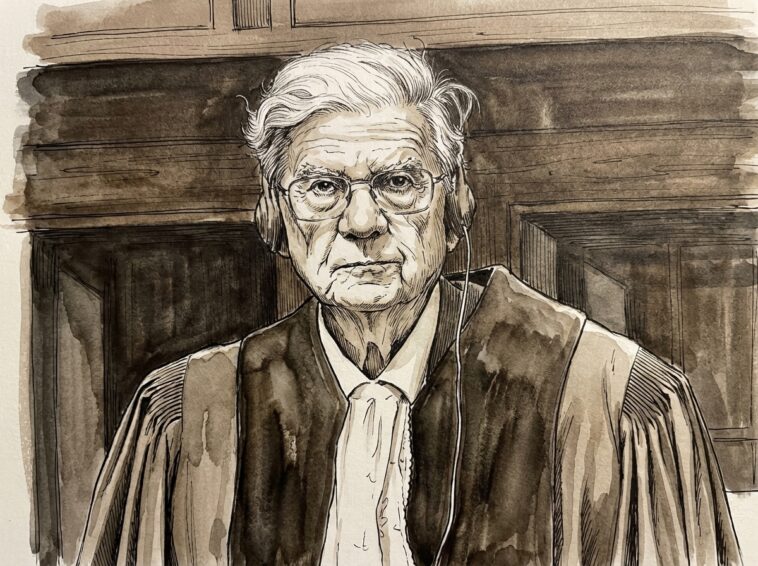
A Call to Consciousness: Reflecting on Aharon Barak’s Stirring Message
The stirring address delivered by former Supreme Court President Aharon Barak – from a protest stage at Habima Square – has resonated across our nation like few messages have before. His comments, far from being one more warning in a series of protest chants, compel us to take a closer look at our legal and political system and to question whether we are truly safeguarding the fundamental principles of justice and democracy.
Unpacking a Moment of Legal and Political Introspection
In his speech, Barak did not simply articulate grievances; he urged us all to listen carefully to the very core of our judicial process. His words invite citizens, jurists, and politicians alike to dissect the tangled issues that have accumulated over years of political maneuvering and judicial battles. He cautioned that ignoring these warnings could lead us down a dangerous path where the system we rely on to protect our rights becomes too compromised to serve its original, critical purpose.
Barak’s message is a call to action. It pushes us to ponder the delicate balance between preserving the integrity of our legal system and adapting to evolving societal needs. His insistence that we should not dismiss his remarks as mere protest rhetoric is a reminder that sometimes the most intimidating messages come from those who have seen the system’s inner workings up close.
Dissecting the Tricky Parts of Judicial Reform
Preserving a judiciary that is both respected and effective is always filled with tricky parts. Addressing legal reforms means digging into a system where the fine points, the hidden complexities, and the subtle parts that make up its very structure can be challenging to rework. Barak’s critique serves as an urgent reminder to all legal professionals and lawmakers that reforming the judiciary is not as simple as sweeping changes – it is about gradually reshaping the very foundations on which our legal traditions are built.
Key areas of concern include:
- Reviewing outdated judicial practices while safeguarding longstanding legal rights
- Ensuring political influence does not undermine judicial independence
- Addressing the overlapping responsibilities between political leadership and judicial oversight
- Clarifying the roles and accountability of legal institutions
These complicated pieces need careful examination, as any hasty move might leave us with more tangled issues and confusing bits than solutions. Barak’s words thus remind us to think carefully, ensuring that we’re prepared to find our way through the maze of legal reforms.
Political Influence and the Pressures of Modern Governance
The legal arena does not exist in isolation. Political developments inevitably shape, and sometimes distort, the system meant to uphold justice. In today’s fast-moving political climate, it is all too easy to see judicial reforms as simply part of the larger game of political power struggles. Yet, as Barak’s speech underscores, when politics intrudes on the judiciary, the consequences can be far-reaching.
Many of the changes proposed over the years have been full of problems, loaded with issues that challenge the very pillars of fair governance. Barak reminds us that each subtle detail in judicial legislation can have significant implications – not just for lawyers and lawmakers, but for every citizen who relies on the fairness of the law. It is essential to ensure that even as political power shifts, the legal framework remains robust, transparent, and free from undue external pressure.
Finding Your Path: The Role of the Judiciary in Democratic Society
One of the most critical missions of any legal system is to provide a reliable path through which justice is carried out, even when the landscape is tense or overwhelmed by conflicting interests. The judiciary must serve as the guardian of rights – a role that sometimes requires it to stand apart from shifting political winds. Barak’s call stresses that failing to preserve this independence might eventually erode public trust and undermine the legitimacy of the entire system.
In a functioning democracy, the legal process is not merely about passing laws but ensuring that those laws are applied justly. Protecting this system means:
- Maintaining clear, documented legal precedents
- Guaranteeing fairness in court proceedings
- Building public confidence through transparency and accountability
By emphasizing these measures, Barak challenges both legal practitioners and the broader public to take an active role in safeguarding a system that is as essential as it is delicate. In effect, his remarks are a plea not to forget the importance of a fair interpreter of the public conscience – our judiciary.
Dissecting the Fine Points of Constitutional Debate
While technical jargon often obscures public debates on constitutional matters, the underlying issues are noteworthy and deserve our full attention. At the heart of Barak’s argument is a critique of current proposals that threaten to tilt the balance between legislative and judicial powers. His message makes it clear that the debate is not about abstract legal principles or arcane traditions – it is about real-world consequences that affect every aspect of our civic life.
Consider these factors:
- The separation of powers and its role in preventing any single institution from becoming too dominant
- The potential for conflict when political bodies attempt to limit judicial oversight
- The need for next-generation legal frameworks that cope with modern challenges while preserving established rights
In addressing these topics, Barak’s commentary pushes us to figure a path through the often intimidating maze of legal reforms and political campaigning. His insights reinforce the necessity of constructing a fair, balanced approach to legal reform that respects centuries-old judicial traditions while adapting to contemporary challenges.
Towards a Resilient Legal System: Addressing Hidden Complexities
Every legal system contains its own set of hidden complexities – little details that may seem insignificant at first but can have profound implications over time. Barak’s remarks invite us to look into these subtle parts with a discerning eye. His message is not simply one of moral or political criticism; it is a technical assessment on the numerous challenges that lie in realigning the balance between the judiciary and political institutions.
Some of the key challenges he refers to include:
- Reconciling modern legislative changes with long-standing judicial practices
- Identifying the bottlenecks that hinder judicial innovation
- Clarifying accountability within the framework of judicial reforms
These problematic areas, full of tricky parts and overwhelming choices, highlight the importance of a measured, thoughtful approach in adapting legal systems to our modern realities. In effect, by carefully examining these detailed challenges, we can work to construct reforms that do not simply patch over problems, but truly remedy the underlying issues.
Securing Independence: Keeping the Judiciary Safe from Political Intrusion
A recurring theme in Barak’s address is the utmost need for judicial independence. If the judiciary is allowed to fall under excessive political influence, its ability to serve as an unbiased arbiter of justice diminishes. This independence is a must-have element for any vibrant, functioning democracy. Without it, even well-intentioned reforms risk being skewed by political agendas that may favor short-term gains over long-term justice.
To ensure that judicial independence remains intact, several steps are crucial:
- Transparent appointment processes: Clear criteria for selecting judges and justices protect the system from favoritism.
- Strict oversight mechanisms: Accountability systems must be in place to monitor any interference from political bodies.
- Public engagement: An informed citizenry is the best defense against unnecessary political interference.
These measures, while not a cure-all, help to create a legal environment where the judicial process can maintain its integrity, even amidst charged political climates. Barak’s critique underlines that if these safeguards are removed or diminished, the very structure of our right to legal recourse could be compromised.
Evaluating the Impact on Everyday Life
Legal policies, reforms, and judicial reforms are not abstract matters reserved solely for lawmakers and legal scholars. They directly impact everyday life. The dialogue sparked by Barak’s remarks encourages citizens to question how legal changes might affect their day-to-day experiences. Whether it is access to impartial courts, fair treatment under the law, or the security of personal rights, every policy adjustment must be scrutinized for its real-world implications.
Let’s consider some practical aspects:
- Access to Justice: A balanced judiciary ensures that citizens can resolve disputes without fear of bias or injustice.
- Economic Impact: Legal reforms affect business environments, where predictable, fair legal frameworks are a key component of economic stability.
- Social Cohesion: Trust in the judicial system directly translates into a sense of security and fairness within society.
Thus, while the legal debates may seem remote to the average citizen, their ramifications are immediate and significant. Barak’s address serves as a reminder that everyone has a stake in how the law is made and enforced.
Working Through Political Tensions: A Balanced Debate
The legal system currently finds itself amidst an environment loaded with issues – from political tensions to diverging interpretations of fundamental rights. This climate of contention can often seem overwhelming or nerve-racking, yet the need for balanced debate is more pressing than ever. The protest stage witnessed at Habima Square was not just a symbol of dissent but of democratic engagement where the public has the power to steer through contentious debates by demanding clarity and responsibility.
It is essential for all interested parties to work through these tangled issues by:
- Engaging in constructive dialogue among different stakeholders
- Ensuring that reforms are debated in a transparent, democratic forum
- Listening not only to political voices but also to the insights of experienced legal experts like Barak
Only by taking this approach can we overcome the overwhelming nature of the current political conflict and craft meaningful policies that benefit the nation as a whole.
Charting a Course for the Future of Legal Governance
Looking ahead, the challenge remains to craft a legal framework that not only adapts to modern societal needs but also upholds the traditional values that have long underpinned our judiciary. Aharon Barak’s message reminds us that this balancing act is a continuous process that demands attention to every detail – from the subtle parts of judicial appointments to the critical need for oversight and accountability.
This journey is best approached by focusing on several key areas:
| Issue | Challenges | Potential Solutions |
|---|---|---|
| Judicial Independence | Political interference; pressure on appointment processes | Transparent criteria; independent oversight bodies |
| Legal Accessibility | Complex procedures; uneven representation | Simplified legal processes; enhanced public legal education |
| Constitutional Balance | Overlapping powers; unclear jurisdiction | Clarified constitutional guidelines; strict separation of powers |
Each of these steps contributes to crafting a robust legal system that can confidently meet the challenges of both today and tomorrow.
Engaging the Public: The Role of Civic Participation
No discussion about legal reform is complete without acknowledging the critical role played by the public. Civic engagement is not merely a checkbox in democratic practice; it is the backbone of a vibrant, accountable government. Barak’s impassioned address is, at its heart, a call for increased public participation in matters of judicial reform.
Civic duty in this context means:
- Staying informed: Understanding the changes proposed in the judicial system and their potential impacts.
- Voicing opinions: Using democratic channels to express agreement or concern regarding proposed reforms.
- Demanding transparency: Insisting that legal debates and decisions remain open to public scrutiny.
By taking these steps, every citizen can help shape a legal system that not only meets fiery political debates with clarity but ultimately reinforces the principles of fair governance that Barak champions.
Taking a Closer Look at the Current Judicial Landscape
Examining the status quo, one sees that the legal framework is already shaped by a mix of traditions and modern reforms. The situation can be nerve-racking for those who fear that political ambition might eventually erode the hard-won gains in judicial independence. Yet it would be an oversimplification to suggest that all recent reforms have been misguided.
Indeed, there are parts of our legal system that continue to shine as beacons of fairness and justice. A few examples include:
- Stringent safeguards against corruption: Mechanisms established to detect and address misconduct even at the highest levels of legal authority.
- Public accountability frameworks: Systems that ensure legal decisions are open to rigorous public and media scrutiny.
- The evolution of legal education: Initiatives that strive to inform future generations about the responsibilities of judicial service.
These initiatives reinforce the idea that while challenges exist – replete with tricky parts and complicated pieces – the judiciary remains a vital part of our societal machinery. Barak’s comments remind us to remain watchful, to ensure that any measures taken continue to enhance rather than undermine these established pillars of fairness.
Addressing the Overwhelming Challenges with Constructive Dialogue
In the midst of robust debate, it is easy for opposing camps to become entrenched in their positions. The current environment, loaded with issues and subtle twists on both sides, calls for a fresh sense of constructive dialogue. The task ahead involves not merely positioning ourselves in defense or opposition but coming together to shape reforms that will stand the test of time.
Constructive dialogue should ideally focus on:
- Agreeing on shared principles that underlie the need for judicial independence
- Pledge for a balanced approach that respects both historical traditions and modern needs
- Emphasizing the public good over individual or political gains
Such dialogue can help bridge the gaps between contentious views and pave the way for reforms that truly reflect democratic ideals. Barak’s address provides a framework from which this dialogue can grow – rooted in experience, unafraid of misgivings, and determined to find solutions among the maze of legal complexities.
Conclusion: The Urgency of Acting on a National Call
The profound message of Aharon Barak goes beyond typical protest rhetoric. It is an urgent call that demands careful and sustained attention from every segment of society. His words challenge us to acknowledge the nerve-racking realities of our legal system – to face the confusing bits, the tangled issues, and the subtle details that, if neglected, can lead to a dangerous erosion of our judicial independence.
Moving forward, a successful reform of our legal framework hinges on a few key takeaways:
- Active Engagement: Citizens must educate themselves on legal reforms and participate in discussions that shape their future.
- Balanced Reforms: Lawmakers and legal experts should work in tandem to implement changes that safeguard the judiciary against political intrusions.
- Ongoing Oversight: Continual assessment and public accountability must remain at the core of judicial reforms to ensure that the promise of fair justice is never compromised.
In essence, the legal landscape is a living entity – one that evolves and adapts. The revelations and cautionary words of Barak offer us an opportunity to reexamine our system and make sure that every twist and turn along the way is managed with thoughtfulness and foresight. His message is a mirror held up to a society at a crossroads, urging us to make deliberate choices, understand every little twist, and figure a path to a just and balanced future.
A Future Built on the Foundations of Justice and Public Trust
Finally, the journey ahead is one that must be taken collectively. It is about more than legal reforms or political debates; it is about building a future where the rights of every individual are protected by a robust, transparent, and impartial judiciary.
To steer through these challenging times, we must address the following critical points:
- Reaffirming the Role of the Judiciary: Ensuring that judges and legal systems remain independent must be seen as a key national priority.
- Commitment to Transparency: Clear, public discussions about the proposed legal changes can help demystify the process and build trust.
- Investing in Legal Literacy: Educating the public about the fine shades of legal reforms empowers citizens to hold their government accountable.
By taking a closer look at these issues and working through the overwhelming challenges with a collaborative mindset, we set the stage for a resilient legal system. One that not only meets the demands of modern governance but does so by honoring the legacy of those who dedicated their lives to justice, like Aharon Barak.
Embracing a Collaborative Path Forward
In conclusion, it is clear that the call from former Supreme Court President Aharon Barak is not just a fleeting protest cry – it is a sustained appeal to all who cherish the values of fairness and accountability. His passionate remarks provide us with the momentum needed to turn the tide on a system under strain, filled with tricky parts, overwhelming challenges, and subtle details that demand our attention.
If we are to safeguard the judicial process against political overreach and ensure that our legal system remains an unwavering pillar of democracy, the pathway is clear. It is a path defined by active citizen participation, a balanced approach to reform, and an unwavering commitment to transparency and justice.
Today, more than ever, the message is super important: We must act on these insights before the legal framework becomes irreversibly compromised. It is only by working together – lawmakers, critics, legal practitioners, and ordinary citizens – that we can ensure our approach to judicial reform is thoughtful, inclusive, and geared entirely toward the preservation of our democratic ideals.
Let this moment serve as a catalyst for change. Let us dive in, not shy away from the nerve-racking challenges ahead, and commit to constructing a legal system that is as resilient as it is fair. The future of justice depends on our willingness to absorb these lessons and work methodically through every complicated piece to create what is, ultimately, an indispensable legacy for generations to come.
Originally Post From https://www.haaretz.com/opinion/editorial/2026-01-05/ty-article-opinion/.premium/heed-the-call-of-former-supreme-court-president-aharon-barak/0000019b-8d5f-dbf4-a79f-9d5f4f1a0000
Read more about this topic at
Ex-High Court president at anti-government rally
Heed the Call of Former Supreme Court President Aharon …