Judicial Independence in an Era of Heightened Political Scrutiny
The role of the judiciary in today’s politically charged atmosphere is more critical than ever. In a time when the nation is wrestling with twisted issues of power and influence, the messages coming from the highest court beckon for clarity. Chief Justice John Roberts’ recent year-end report has sparked debate across the nation. Many critics contend that his message, intended to affirm judicial independence, falls short of a bold, honest commentary in an era that demands transparency and accountability.
As our nation moves closer to its 250th anniversary, discussions about the functioning of our legal institutions take center stage. The report, laden with historical references and allusions to earlier moments of tension, provides an opportunity to reflect on how the judiciary is coping under the weight of modern political pressures. While Chief Justice Roberts revisits the storied legacy of judicial independence, the lack of a clear and forceful message in the face of political assaults raises worrying questions for legal observers, practitioners, and the general public alike.
The Historical Context: Learning from the Past
In his report, Chief Justice Roberts calls upon the enduring principles that have historically defined American jurisprudence. By citing President Calvin Coolidge’s call to “turn for solace” to the nation’s founding documents, Roberts nods to a time when the legal framework was unambiguously respected. However, critics argue that this appeal to historical legacy, rather than addressing current challenges head-on, leaves crucial strategic questions unanswered.
This historical summary touches on several key moments in our legal history. The account of Justice Samuel Chase’s impeachment process in the early 19th century is frequently mentioned as a prime example of how attempts to politically manipulate the judicial branch have long been met with resistance. In Roberts’ own words, the report highlights that impeachment should never be used as a tool for reacting against judicial decisions that certain political figures disagree with. In doing so, he reminds readers of the importance of keeping the judicial system insulated from the everyday turmoil of political battles.
Below is a timeline summarizing major historical moments that have shaped American judicial independence:
| Date | Event | Significance |
|---|---|---|
| 1805 | Impeachment of Justice Samuel Chase | Set a precedent against using impeachment to challenge judicial decisions |
| 1930s-1940s | Expansion of judicial review | Affirmed the power of the judiciary as a check on executive authority |
| Late 20th Century | Increased politicization of the courts | Highlighted the need for transparent judicial measures to counter political pressures |
| 2025-2026 | Current climate of political criticism | Renewed focus on ensuring the independence and resilience of the judiciary |
This table shows that while history provides clear lessons about the pitfalls of political interference, the judges on the bench today are confronted with a uniquely tangled array of modern political pressures. In many ways, the historical narrative both inspires and warns in equal measure.
The Report’s Mixed Message: Ambiguity Amidst Urgency
Chief Justice Roberts’ year-end report is both a tribute to the past and a reflection on current circumstances. In his 13-page communication, he emphasizes the enduring strength of life tenure, salary protections, and the separation of powers. Yet, the report has been seen by some as lacking the crisp, unambiguous message needed to rally public confidence and solidify the court’s standing during troubling times.
Critics, such as former federal prosecutor Joyce Vance, have argued that in a period when the judiciary’s institutional voice is desperately needed, the majority of the justices have remained silent at a crucial moment. Vance’s commentary on Roberts’ report suggests that the choice of imagery—such as the picture of an empty courtroom—symbolizes the Court’s perceived failure to effectively address the ongoing challenges posed by political actors like former President Donald Trump and his supporters.
In this light, many believe that the report could have been more impactful. Instead of resorting to historical allegory and abstract commentary, there was an opportunity for a more direct and contemporary appeal for judicial integrity and courage. Listeners and legal observers alike yearn for a statement that cuts through the haze of political maneuvering, offering clear guidance and reassurance about the Court’s commitment to fairness.
Key Points Critiqued by Legal Experts
- Emphasis on historical context over current, pressing issues
- A reliance on abstract calls to foundational documents rather than actionable statements
- The symbolic use of an empty courtroom in public imagery that fails to capture the vitality of the Court
- Insufficient protest against political rhetoric that undermines judicial credibility
- A missed opportunity for stronger, more direct advocacy for judicial independence
These points encapsulate the sentiment that while tradition is critical, the need of the hour is a robust, straightforward assertion of the judiciary’s independence. As political tensions escalate, the legal community is watching closely, eager for signals that the Court will stand firm in its duty to uphold the rule of law.
Political Pressures and the Judicial Response
The modern political landscape is full of tricky parts and tangled issues that challenge even the most seasoned professionals. The judiciary, as an institution, must contend with both overt and subtle attempts to sway its course. This challenge is especially pronounced when political figures publicly target judges and court decisions, thereby testing the strength of judicial protection mechanisms.
In recent years, public criticism—particularly from high-profile political figures—has created an environment that can be described as both intimidating and nerve-racking for those in the legal field. The report’s reliance on the past as a rhetorical tool might be seen as too safe a route during times when the stakes are indisputably high.
Below is an outline that describes the current political pressures and the judiciary’s response:
- Direct Political Criticism: Public statements and social media posts attacking judicial decisions, often questioning the legitimacy of rulings.
- Calls for Impeachment: Recent efforts by critics to challenge the credibility of judges through impeachment rhetoric, reminiscent of historic yet misguided attempts.
- Institutional Apathy: Perceptions among some observers that the Supreme Court justices are not engaging sufficiently to counteract these external pressures.
- Legal Precedents as a Shield: The reliance on historical cases and precedents to reaffirm a commitment to independence, which may not resonate with a public seeking immediate clarity.
These elements together paint a picture of a legal system navigating a labyrinth of political influence, where the need to remain impartial is both a great strength and a heavy burden.
Assessing the Court’s Historical Analogies and Their Limitations
One of the report’s strongest points is its appeal to history. By invoking the legacy of figures like Samuel Chase and the foundational documents of the nation, Chief Justice Roberts reminds us of the long-standing traditions that have kept the judiciary insulated from the chaotic influences of partisan politics. However, history is a double-edged sword.
While historical analogies can illuminate the fine points of judicial independence, they can also obscure the pressing realities of modern political dynamics. In today’s climate, where every public word can be seized upon and politicized, reliance on historical examples may come off as a retreat from direct confrontation with today’s issues.
Critics argue that instead of using these historical narratives as a shield, Chief Justice Roberts could have fared better by providing specific remarks on how the Court plans to counter the influence of political rhetoric. Some of the historical moments, despite their instructional value, do not entirely capture the small distinctions between past political climates and those of today.
Here is a comparative analysis that sheds light on the differences between traditional and contemporary approaches to safeguarding judicial independence:
| Aspect | Historical Approach | Modern Challenges |
|---|---|---|
| Political Rhetoric | Less pervasive due to limited media channels | Amplified by social media and instant communication |
| Judicial Accountability | Operated under clear legal statutes and traditions | Facing complex accusations in the realm of public opinion |
| Public Trust | High reliance on established norms and ceremonies | Constantly tested by real-time feedback and partisan divisions |
This table clearly illustrates that while the past offers valuable lessons, the modern judicial landscape requires new strategies. The challenge remains in bridging the gap between respectful historical tradition and the necessary directness demanded by the current environment.
Balancing Tradition and Urgency: A Call for Clearer Judicial Messaging
As debates surrounding the report continue, the overarching takeaway is the need for a dialogue that addresses both the reassuring power of tradition and the immediate demands of the moment. The legal community, along with concerned citizens, yearns for a judicial message that is both respectful of the past and ambitious enough to meet today’s challenges.
In a climate where critics argue that the Supreme Court is not providing the robust leadership it once did, it is imperative for the nation’s top judicial figures to combine historical reverence with unambiguous clarity. Chief Justice Roberts’ approach, which leans heavily on historical rhetoric, is seen by some as an attempt to deflect rather than confront. While this might be an understandable reaction given the pressures, it leaves many observers hoping for more explicit guidance from the institution that is meant to be the ultimate arbiter of justice.
Below are several suggestions for how future communications from the Supreme Court might strike a more effective balance:
- Direct Address of Contemporary Issues: Rather than primarily relying on references to the past, a more explicit examination of today’s political challenges could help restore public confidence.
- Clear Stance Against Political Interference: Articulating a strong, unequivocal stand against political attacks on judicial decisions could serve as a rallying point for all supporters of the rule of law.
- Engaging Public Discourse: Hosting public forums, interviews, or written commentaries that address the current environment directly would foster transparency and trust.
- Integrating Modern Context with Historical Wisdom: Bridging the gap between historical precedent and contemporary political realities will help the public understand that the judiciary is both seasoned and relevant.
By addressing these areas, the Court could signal its readiness to not only preserve but also invigorate judicial independence in the face of overwhelming political pressures.
The Legal Community’s Reaction: Diverse Voices on Judicial Leadership
Within legal circles and among political commentators, opinions on the report diverge considerably. While some experts praise the Chief Justice for reminding the public of the timeless values embodied by the Constitution and the Declaration of Independence, others, like former U.S. attorney Barbara McQuade, believe that a more forthright defense of judicial independence was warranted.
McQuade, for example, commended the inclusion of historical anecdotes but lamented that the message did not go far enough. She argues that in these nerve-racking times, courageous and plainspoken remarks are necessary to reinforce the separation of powers and reassure the public that the judiciary is unyielding in its commitment to impartiality. According to McQuade, this is particularly important when the president and other influential figures are actively undermining trust in the courts.
Critics within the legal community have also expressed concerns about the visible absence of a unified front from the majority of the justices. There is a growing sentiment that the Court’s silence during these trying times can be misconstrued as acquiescence to political pressures, thereby eroding public confidence in an institution that has historically stood as a bulwark against tyranny.
In summary, the debate centers on a few core points:
- Is the reliance on historical rules an effective way to address modern political attacks?
- Does the lack of direct criticism of current political rhetoric weaken the judiciary’s standing?
- How can the Court better communicate a message of unwavering independence without appearing to intervene in political debates?
These questions remain at the heart of the discourse, as legal experts, practitioners, and the public alike assess whether the Supreme Court is truly equipped to provide the leadership needed in such trying times.
Modern Challenges: The Court in the Crosshairs of Political Rhetoric
The political landscape today is full of confusing bits and nerve-racking twists and turns that challenge the careful equilibrium the judiciary must maintain. With the advent of real-time media commentary and rapid-fire public discontent, even the most skilled justices find it difficult to keep the focus solely on legal principles.
In recent years, public statements by political figures have cast a shadow over the Court’s decisions. From outright criticisms of federal rulings to calls for the impeachment of judges, the judiciary is being placed under a microscope that amplifies every reaction. In this climate, the silence of many justices during key moments is seen by some as a signal of inactivity—a dangerous precedent when vigilance is required.
For many commentators, the responsibility to articulate the court’s stance in a world replete with small distinctions between legal and political boundaries falls squarely on the shoulders of its leader. A clear, transparent approach could work wonders in re-establishing public trust and ensuring that the judiciary is seen not as an outdated institution but as a dynamic guardian of constitutional principles.
Key challenges include:
- Digital Age Dynamics: With the rise of social media, every comment can spark heated debates, making it essential for judicial statements to be precise and robust.
- Blurred Lines Between Law and Politics: The modern political environment often blurs the fine shades of distinction between judicial rulings and political messaging.
- Public Perception: A judiciary that appears reluctant or ambiguous in its communication risks falling prey to growing public skepticism.
Indeed, the modern era demands a judicial approach that not only embraces historical wisdom but also speaks directly to the urgent matters of today. The Court must find its path between venerable tradition and the need to address new-age challenges with clear, decisive commentary.
Striking a Balance: The Future of Judicial Communication
Looking forward, it is clear that a reformed strategy is needed—one that marries historical precedent with modern accountability. The lessons of the past must inform, not constrain, the judiciary’s capacity to respond to new pressures. A thoughtful, balanced approach might involve engaging public discourse directly and taking the wheel on communication, which can bridge the gap between legal tradition and modern expectations.
Several strategic recommendations emerge from this debate:
- Enhanced Public Engagement: Initiate dialogue through interviews, public forums, and written op-eds that directly address the challenges of our times.
- Explicit Denouncement of Political Interference: Clearly articulate that political criticism and attempts to undermine judicial decisions will not deter the Court’s commitment to justice.
- Balanced Use of Historical References: Use history as a foundation but emphasize immediate steps and policies that reinforce judicial autonomy in today’s tense political climate.
- Regular, Transparent Updates: Establish a routine in which judicial leaders outline how the Court is responding to political and legal challenges; this could take the form of periodic public addresses or detailed reports.
These approaches could enable the Court not only to remind the public of its storied past but also to assert its readiness to confront every twist and turn of modern challenges head-on.
The Role of Visual Imagery in Communicating Judicial Resolve
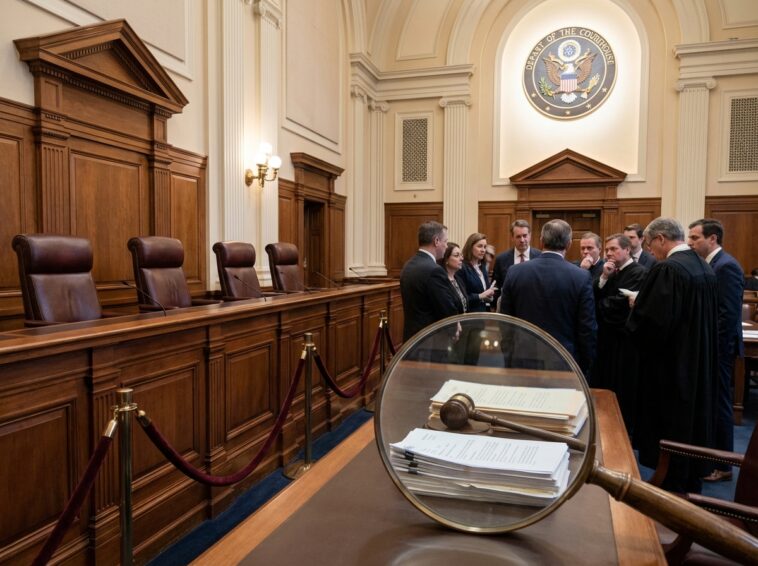
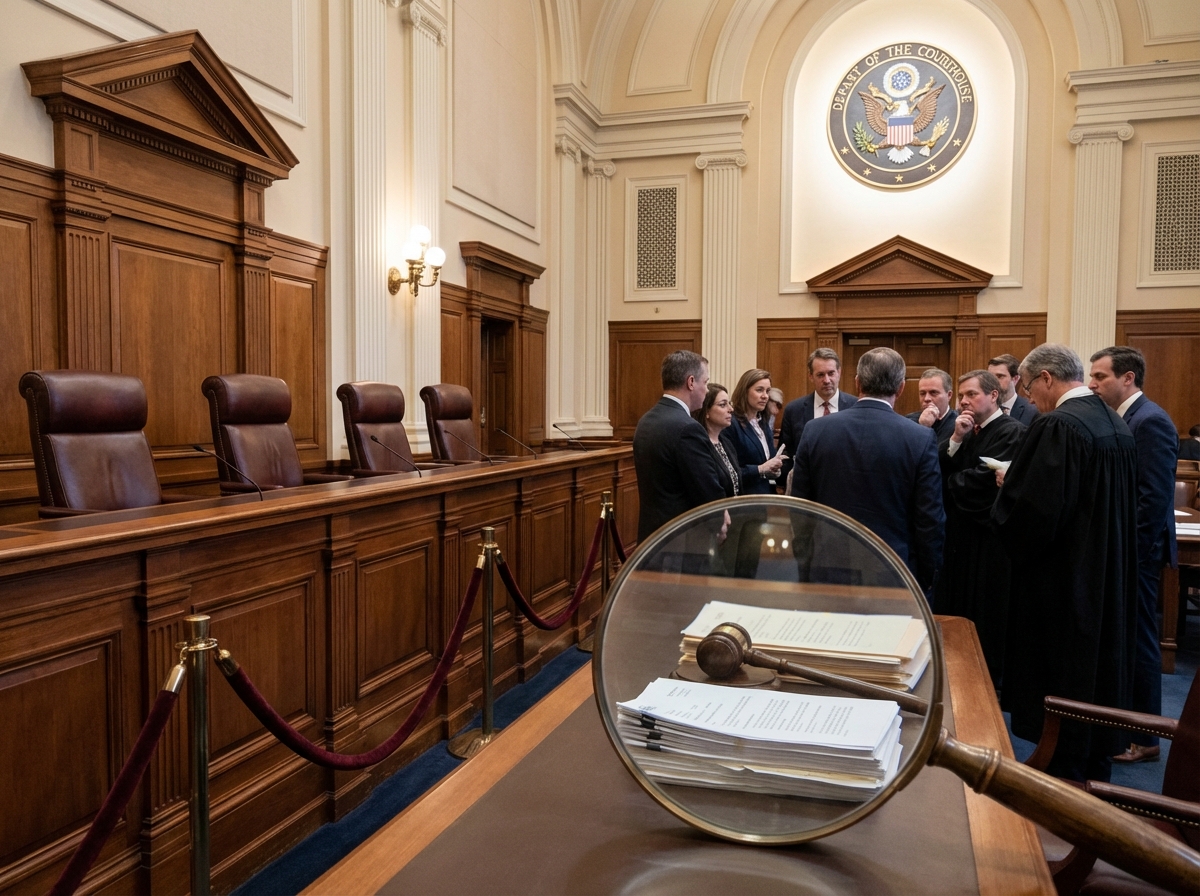
One of the subtler yet significant points in this debate is the role of imagery and symbolism in the Court’s communications strategy. Critics have pointed out that the choice of an empty courtroom in the Chief Justice’s report does little to inspire confidence among those seeking assurance of active judicial oversight.
Visual representations often carry a weight that words alone cannot match. In a medium where images are shared, discussed, and dissected more rapidly than text, a compelling visual can serve as a metaphor for the strength and readiness of an institution. Unfortunately, the empty room in the report has been interpreted by some as a sign of disengagement—a stark contrast to the clear, bustling energy that might be expected from a body that must stand firm against overwhelming political pressures.
Below are some observations on the impact of imagery in judicial communications:
- The Empty Room: Symbolizes potential isolation and passivity, inadvertently feeding into narratives of institutional detachment.
- Dynamic Visuals: Images depicting active engagement, such as energetic court sessions or thoughtful deliberations, could help reframe public perception.
- Historical Parallels: Photographs from historical moments of judicial bravery provide a powerful reminder of the legacy that the current generation must uphold.
Taking a closer look at these factors, it is clear that imagery is not merely decorative—it is a critical aspect of how the judiciary communicates its message to both legal experts and the wider public. In a time of rapid social change and instantaneous reaction, the visual narrative must be as robust and compelling as the verbal one.
Implications for the Future: Ensuring a Resilient Judiciary
As the Supreme Court prepares to review consequential cases in 2026, including those on presidential authority and immigration limits, the pressures exerted by external political forces are only set to intensify. The upcoming docket promises to be a battleground where legal principles meet the messy realities of modern politics. In this context, the debate over Chief Justice Roberts’ report is more than merely academic; it is a call to reaffirm the essential role of the judiciary in a democratic society.
Ensuring that the Court remains a neutral arbiter in the face of turbulent political winds is not just a matter of tradition—it is a critical responsibility. The ongoing tension between upholding historical precedent and addressing modern challenges requires that all involved must work through tricky parts, tangled issues, and even intimidating obstacles with resolve and clarity.
In light of these challenges, several long-term implications can be drawn for the judiciary:
- Institutional Credibility: The manner in which the Court handles these issues will have lasting effects on its legitimacy and the public’s trust in its decisions.
- Legal Precedent: Future cases may well depend on a clearly articulated doctrine of judicial independence, one that leaves little room for political interference.
- Public Engagement: A judiciary that actively communicates its mission and its methods is more likely to garner the support it needs from a skeptical public.
- Balance Between Tradition and Adaptation: Integrating historical principles with modern responsiveness will be key to weathering the inevitable political storms of the future.
These factors underscore the need for a modern, resilient judiciary that is capable of making its way through both historical lessons and today’s charged political environment. A well-articulated, robust message from the Supreme Court is crucial in helping society steer through the current period of division and uncertainty.
Confronting the Challenge: A Call for Transparent Judicial Leadership
As the nation grapples with difficult questions regarding the interplay between politics and law, a transparent, candid voice from the Supreme Court is more important than ever before. There is a pressing need for the judiciary to step forward with direct, unfiltered commentary that not only honors tradition but also addresses modern challenges with plainspoken honesty.
Critics argue that Chief Justice Roberts’ report has missed an opportunity to provide such clarity. Although referencing the foundational documents and historical episodes was meant to remind the public of the Court’s stalwart ideals, many observers felt that a clearer, more immediate articulation of the judiciary’s stance against current political pressures would have been super important.
Looking ahead, the judicial branch must grapple with several important aims:
- Articulate a Clear Stand: The judiciary should not shy away from addressing public concerns and political assaults, clearly stating that its decisions remain beyond partisan influence.
- Engage in Proactive Communication: By taking a more active role in the public discourse, judicial leaders can preemptively defuse misconceptions and rebuild confidence among the citizenry.
- Foster an Environment of Accountability: Although remaining apolitical is key, the Court must also be open to discussing its operational challenges and the safeguards it employs to maintain independence.
In a period when every move is magnified and every word can set off waves of public reaction, the call for transparent judicial leadership cannot be overstated. For democracy to thrive, it is essential that the ruling institutions—especially the judiciary—be perceived as both strong and accessible, capable of steering through even the most complicated pieces of political strife.
Conclusion: Upholding a Legacy of Judicial Integrity
In conclusion, the debate over Chief Justice Roberts’ year-end report is far more than a discussion of historical anecdotes and old documents—it is a mirror reflecting the challenges that the judiciary faces today. As the Court prepares to review cases of significant importance in 2026, its ability to find a balance between historical respect and urgent modern commentary will be key to preserving both its independence and its public trust.
The current political environment, replete with tricky parts and nerve-racking challenges, demands a judiciary that not only remembers its past but also boldly addresses the present. While Chief Justice Roberts’ report serves as an important reminder of judicial traditions, the critiques it has generated serve as an impetus for more direct and transparent communication.
As legal observers, practitioners, and concerned citizens await future statements from the Court, there is a shared hope that forthcoming communications will focus on clear, unambiguous policy stances. Such clarity is essential to counteract the swirling political rhetoric that threatens the foundations of our democratic system.
Ultimately, the judiciary’s strength is measured not only by its storied history but by its willingness to speak plainly about the legal and political battles of our time. By embracing both tradition and the need for clarity, the Supreme Court can continue to serve as a pillar of justice—a steadfast guardian against the confusing bits and tangled issues of modern political life.
This call for a stronger, more transparent judiciary is not an indictment of past practices, but a hopeful invitation for the future. It is a reminder that the rule of law—and the integrity of our courts—remains a cornerstone of American democracy. In times that are tense and loaded with challenges, a balanced judicial voice can inspire confidence and create a more resilient legal framework for generations to come.
In the end, as our nation seeks to bridge the gap between historical legacy and modern exigencies, we are reminded that the true measure of judicial leadership lies not in abstract rhetoric but in the super important actions taken to safeguard the integrity of the law. Clearly articulated, plain language and unambiguous messaging from our highest courts will help ensure that judicial independence remains the guiding force of our democracy, even amidst the overwhelming pressures of our times.
Originally Post From https://www.newsweek.com/majority-of-supreme-court-justices-have-failed-to-show-up-legal-analyst-11300945
Read more about this topic at
When more isn’t always better: The ambiguity of fully …
Investigative Analysis: The Silent Threat of Judicial …